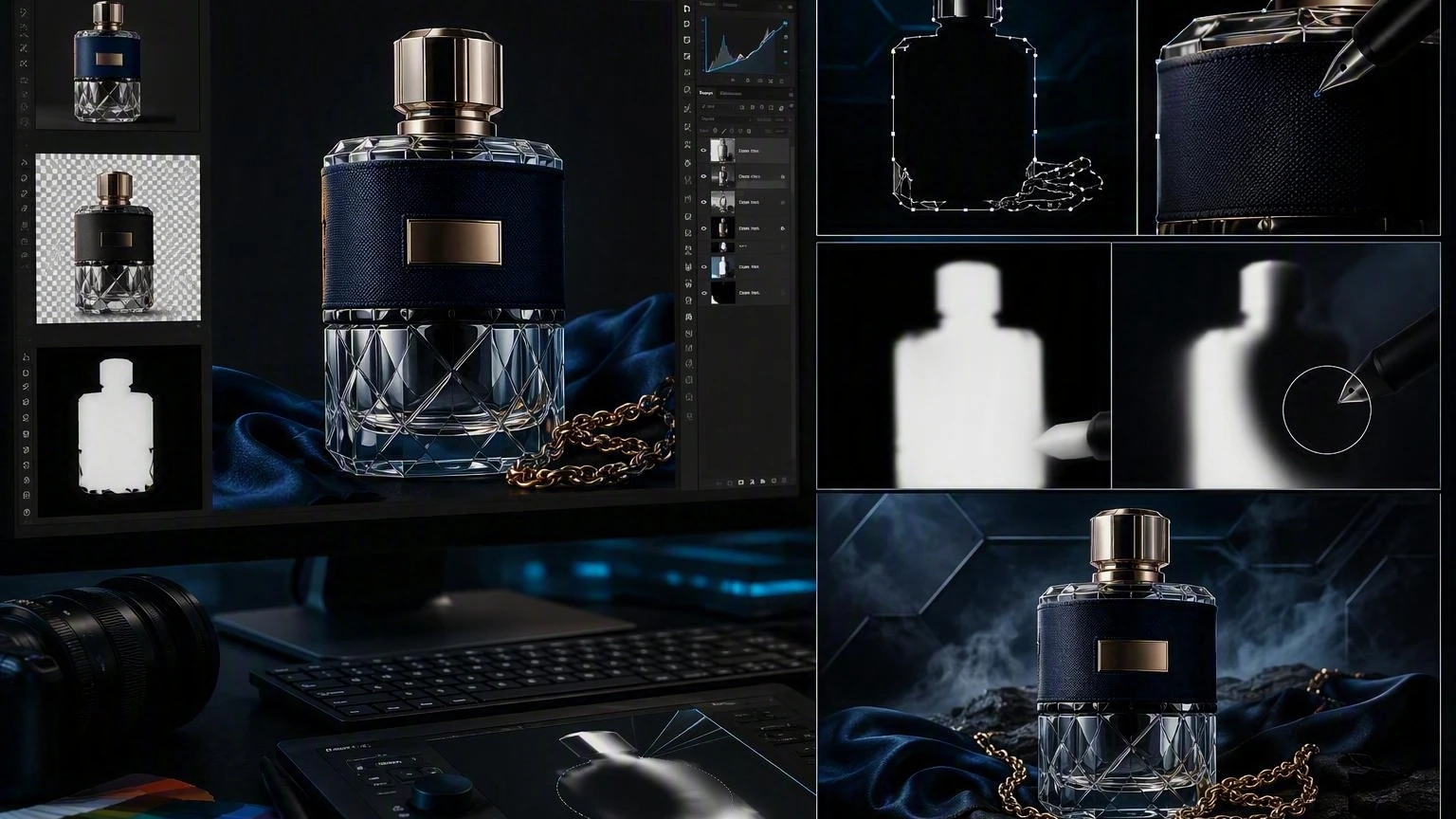
Clipping path, image masking, background removal and creative compositing are connected techniques, but they do different work. Choosing the wrong method can create hard edges where softness is needed, remove transparent detail or produce a technically separated image that looks unnatural.
Clipping Path
A clipping path creates a precise vector boundary around a clearly defined subject. It works well for boxes, bottles, furniture, electronics, simple footwear and packaged products.
It is less suitable for hair, fur, smoke, soft fibres, transparent material and complex natural edges. Forcing a hard path around these areas can create an artificial cutout.
Image Masking
Masking controls visibility at the pixel level and supports gradual transitions. It is useful for hair, fur, feathers, fabric fibres, transparent glass, soft shadows and semi-transparent material.
A mask may still require manual edge cleanup and colour decontamination. It is not automatically better than a path. It is better when softness or transparency needs to be preserved.
Background Removal
Background removal describes the requested outcome rather than one method. The work may involve paths, masks, refined selections, channels, manual painting or a combination of techniques.
Creative Compositing
Compositing integrates several elements into one believable or intentionally stylised scene. It involves more than placing a cutout over a background. Light direction, temperature, camera angle, scale, shadow, perspective, depth and material interaction must agree.
Hybrid Workflows
A perfume bottle may need a clipping path for the principal silhouette, a mask for transparent glass, manual retouching for reflective metal, separate shadow reconstruction and compositing for the final environment.
Choosing by Material
- Hard packaging: clipping path and surface cleanup
- Hair or fur: masking and edge decontamination
- Transparent glass: masking and transparency reconstruction
- Jewellery: path, mask and reflection retouching
- Furniture: clipping path and shadow reconstruction
- Campaign scene: isolation, compositing and colour matching
AI-Assisted Isolation
AI can accelerate initial subject detection, but reflective edges, fine hair, transparent material, overlapping objects and soft shadows still require inspection.
The correct technique is the one that respects the subject and produces the required final asset without sacrificing believable detail.
Discuss a relevant project.
Share the intended use, source condition, volume and delivery context.
Get a Quote