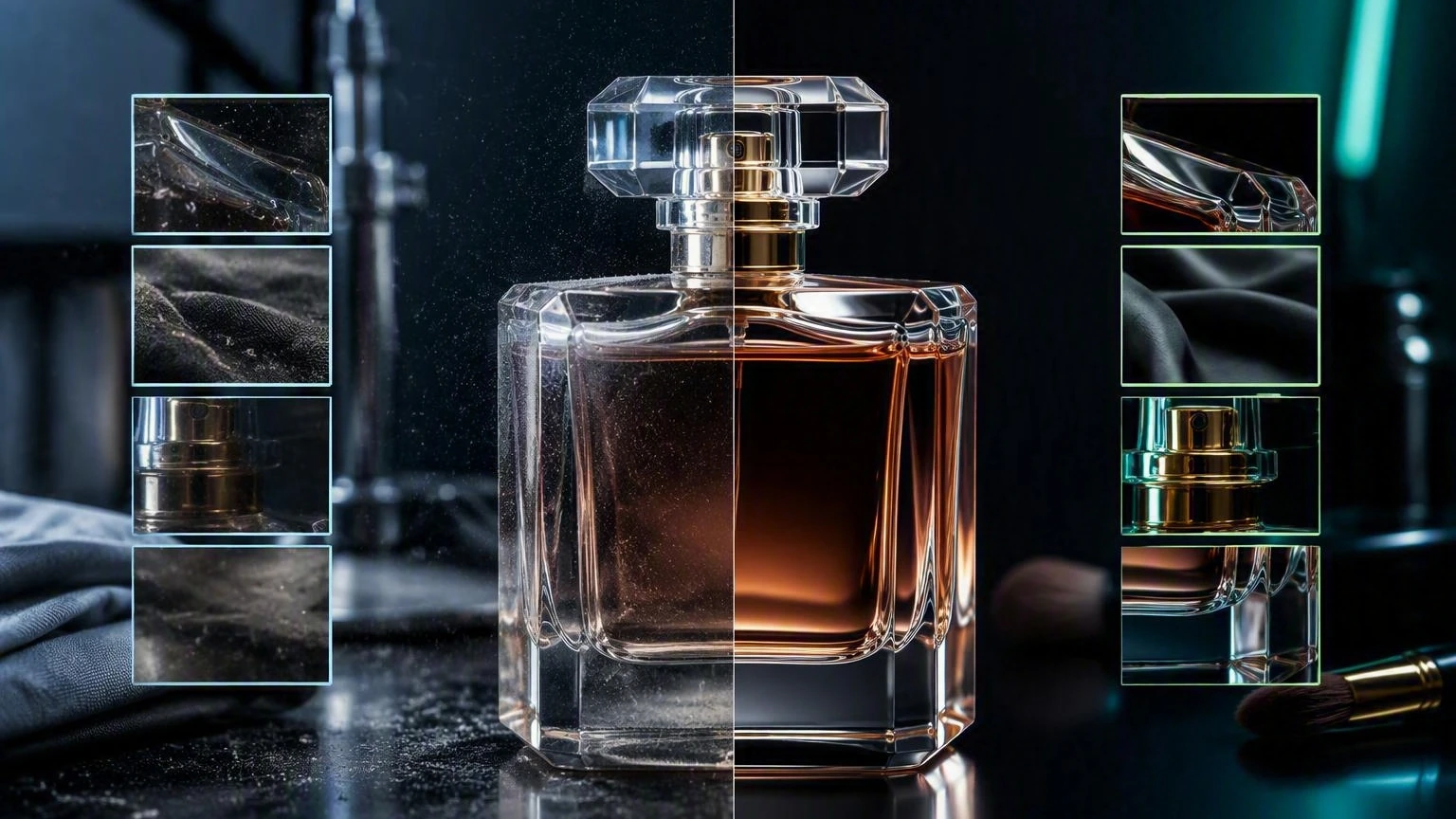
Before-and-after comparisons can reveal how colour was corrected, dust removed, edges refined, materials clarified or a scene reconstructed. They can also mislead.
If the source and final images do not match, the viewer cannot reliably judge the work. If one side is smaller, darker or more compressed, the comparison exaggerates the apparent improvement.
Confirm That the Images Match
Check perspective, product position, distinctive details, crop, lighting and proportions. A comparison between unrelated images may look persuasive while proving little about the actual production work.
Compare at the Same Scale
Before and after images should use equivalent dimensions and the same viewing environment. A user-controlled slider is useful because it allows direct inspection of the same area.
Look Beyond Brightness
A brighter and more saturated image may appear more dramatic, but quality also depends on edge treatment, surface texture, neutral colour, shadow consistency, product proportion and detail preservation.
Inspect Material Detail
Glass should retain transparency and clean edges. Metal should retain structured reflection. Fabric should retain texture. Packaging should retain label integrity and undistorted typography. Refinement should not erase material identity.
Check Whether Product Features Changed
In accuracy-sensitive work, inspect the label, cap, hardware, stitching, gemstone arrangement, colour variant and product dimensions. Significant intentional changes belong in the stated scope. Unintended changes may be errors.
Understand the Service Being Demonstrated
A comparison may show colour correction, background removal, clipping, jewellery retouching, portrait retouching, product cleanup, restoration or creative compositing. The label should match the visible work.
Watch for Presentation Manipulation
- Unequal image size
- Different crop or perspective
- Intentionally blurred source
- Inconsistent compression
- Unrelated source and final files
- Automatic transitions that prevent inspection
The strongest comparisons show that a final image is cleaner, clearer and more useful while remaining connected to the source and approved objective.
Discuss a relevant project.
Share the intended use, source condition, volume and delivery context.
Get a Quote